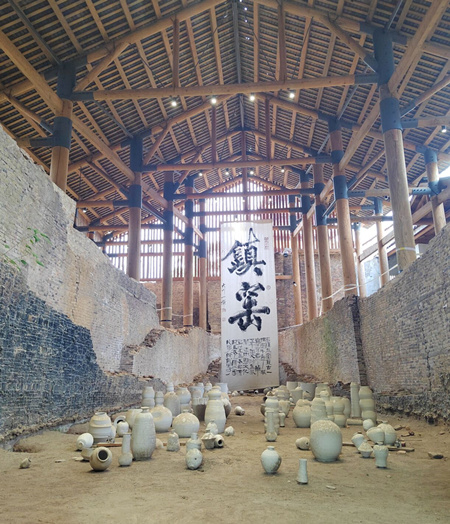
Jingdezhen Kiln
Introduction
The Jingdezhen Kiln, located in Jingdezhen, Jiangxi province, China, is one of the most renowned porcelain production centers in the world. Known as the Porcelain Capital, Jingdezhen has a history of ceramic production that spans over 1,000 years, reaching its zenith during the Song (960–1279), Yuan (1271–1368), Ming (1368–1644), and Qing (1644–1911) dynasties. The kiln's exquisite craftsmanship, innovative techniques, and unique designs have made it a symbol of Chinese porcelain artistry.
Historical Significance
Jingdezhen Kiln's origins can be traced back to the Han Dynasty (206 BC–AD 220), but it gained prominence during the Song Dynasty. The kiln's bluish-tinted white glaze, as seen in artifacts like the translucent ewer with a phoenix-head design, exemplifies the fusion of Eastern and Western artistic influences. This ewer, inspired by Persian metalwork from the Tang Dynasty (618–907), showcases intricate details such as a four-petal flower at the mouth and a phoenix motif, symbolizing cultural exchange along the Silk Road.
The kiln's production techniques and designs evolved over centuries, reflecting the artistic and technological advancements of each era. During the Yuan Dynasty, Jingdezhen became the official porcelain production site for the imperial court. The Ming and Qing dynasties saw further refinement in porcelain-making, with innovations such as blue-and-white ware, doucai, wucai, and famille-rose porcelain.
Artistic and Technical Innovations
Jingdezhen Kiln is celebrated for its mastery of various porcelain styles and techniques. Among its notable contributions are:
-
Blue-and-White Porcelain: First developed during the Yuan Dynast, this style features cobalt blue designs on a white background. It became a hallmark of Jingdezhen's production and was highly sought after both domestically and internationally.
-
Doucai and Wucai Porcelain: Doucai combines underglaze blue-and-white designs with overglaze colors, while wucai uses multiple overglaze colors without an underglaze outline. These techniques, developed during the Ming Dynasty, demonstrate Jingdezhen's ability to innovate and adapt to changing tastes.
-
Famille-Rose and Enamel Ware: Introduced during the Qing Dynasty, famille-rose porcelain uses opaque white enamel to create soft, pastel colors, while enamel ware features vibrant, layered designs. These styles reflect the influence of European techniques and materials.
-
Lang Ware: Created during the Kangxi reign (1662–1722) of the Qing Dynasty, Lang ware is known for its bright red glaze resembling ox blood. This type of porcelain, developed under the supervision of Lang Tingji, showcases Jingdezhen's expertise in glaze application and firing techniques.
Cultural and Economic Impact
Jingdezhen Kiln played a crucial role in China's cultural and economic history. Its porcelain products were highly prized by the imperial court and exported worldwide via the Maritime Silk Road. Archaeological discoveries, such as the "Nanhai One" shipwreck, reveal the global reach of Jingdezhen porcelain, which was traded as far as Southeast Asia, Africa, and Europe.
The kiln's influence extended beyond commerce, shaping artistic traditions and inspiring other kilns across China. For example, Canton porcelain, produced in Guangdong Province, used semi-finished white porcelain from Jingdezhen as a base for its colorful overglaze decorations.
Preservation and Tourism
Today, Jingdezhen remains a vital center for porcelain production and cultural heritage. The Ancient Kiln & Folk Customs Museum in Jingdezhen offers visitors a glimpse into the history and craftsmanship of Chinese porcelain. This national 5A scenic spot features ancient kilns, traditional workshops, and exhibits on porcelain-making techniques from the Ming and Qing dynasties. Highlights include the Dragon Kiln of the Song Dynasty, the Gourd Kiln of the Ming Dynasty, and the Steamed Bun Kiln of the Yuan Dynasty.
The museum also showcases ceramic folk customs, musical performances using ceramic instruments, and opportunities for visitors to create their own porcelain pieces. These attractions celebrate Jingdezhen's legacy and ensure its continued relevance in the modern era.
Legacy and Global Recognition
Jingdezhen Kiln's enduring legacy lies in its ability to blend tradition with innovation. Its porcelain artifacts are not only artistic masterpieces but also valuable historical records of China's cultural and technological achievements. The kiln's influence can be seen in museums and collections worldwide, where Jingdezhen porcelain is revered as a symbol of Chinese artistry and craftsmanship.
Through ongoing preservation efforts and cultural exchanges, Jingdezhen Kiln continues to inspire new generations of artists and enthusiasts, cementing its status as a cornerstone of China's cultural heritage.








